

A prior backup in a hall bathroom that is followed by a persistent smell is more than an inconvenience—it can be a sign that wastewater residue, a damaged drain component, or a sewer-gas pathway remains. A bathroom drain odor after a backup may seem to disappear and return, especially when the shower runs, the toilet flushes, or the home has been closed up during a warm Orange County day. The good news is that the source can usually be identified with a careful plumbing inspection. This guide explains why odors happen after a backup, which safe steps homeowners can take first, and when to call a professional plumber for drain cleaning, camera inspection, or pipe repair.
Why a Bathroom Drain Odor Can Remain After a Backup
A backup occurs when wastewater cannot move through the drain line as intended. Even after water recedes, material that caused the blockage may still be coating the inside of the pipe or sitting farther down the line. That is one reason a bathroom drain odor can linger after the visible backup appears resolved.
In a hall bathroom, the odor may come from the toilet, tub, shower, sink, or a shared branch drain serving more than one fixture. Common causes include:
- Residual waste or organic buildup: Hair, soap scum, toothpaste, paper products, and wastewater solids can cling to pipe walls and produce a sour or sewage-like smell.
- An incomplete clog removal: A plunger or chemical product may get water moving without fully clearing the obstruction. The remaining buildup can continue trapping debris.
- A dry or compromised trap: Every sink, tub, and shower drain has a curved P-trap designed to hold water. That water seal blocks sewer gas. If it dries out, leaks, or is siphoned empty, odors can enter the room.
- A toilet seal problem: A failed wax ring or loose toilet can allow sewer gas to escape around the toilet base, sometimes without causing an obvious water leak.
- Drain or vent damage: Cracked pipes, separated fittings, or a blocked plumbing vent can interfere with drainage and allow odors to develop.
Southern California’s warm, dry conditions can make intermittent odor issues more noticeable. A rarely used guest or hall bath in Laguna Hills, Anaheim Hills, Irvine, or nearby communities can lose its trap seal faster than a frequently used bathroom.
Quick Checks for a Sewer Smell in a Hall Bathroom
What should you do first when a bathroom smells after a backup? Start by identifying when and where the odor is strongest. Do not pour repeated chemical drain cleaners into the plumbing; these products can damage older pipes, create dangerous splashing hazards, and make professional drain service more difficult.
- Run water in every fixture. Run the hall-bath sink and shower or tub for 30 to 60 seconds. Flush the toilet once. This helps refill P-traps that may have dried out.
- Check for slow draining or gurgling. A slow sink, bubbling toilet, or gurgling tub drain may indicate a partial blockage or venting issue still affecting the line.
- Look around the toilet base. Check for damp flooring, staining, movement, or an odor that becomes stronger near the base. Avoid rocking the toilet, since movement can worsen a failing seal.
- Inspect overflow openings. Sink overflows and tub overflows can hold bacteria and soap residue. A plumber can clean these areas safely as part of a full drain service.
- Note whether other drains are affected. If nearby bathrooms, laundry drains, or kitchen fixtures are slow, the issue may be in a larger branch line or the main sewer line rather than one fixture.
If the smell is strongly sewage-like, if wastewater returns, or if multiple fixtures back up at once, limit water use in the home and arrange prompt professional help. A main sewer backup can worsen quickly when additional water enters the system.
When Drain Cleaning Is Not Enough After a Toilet Backup
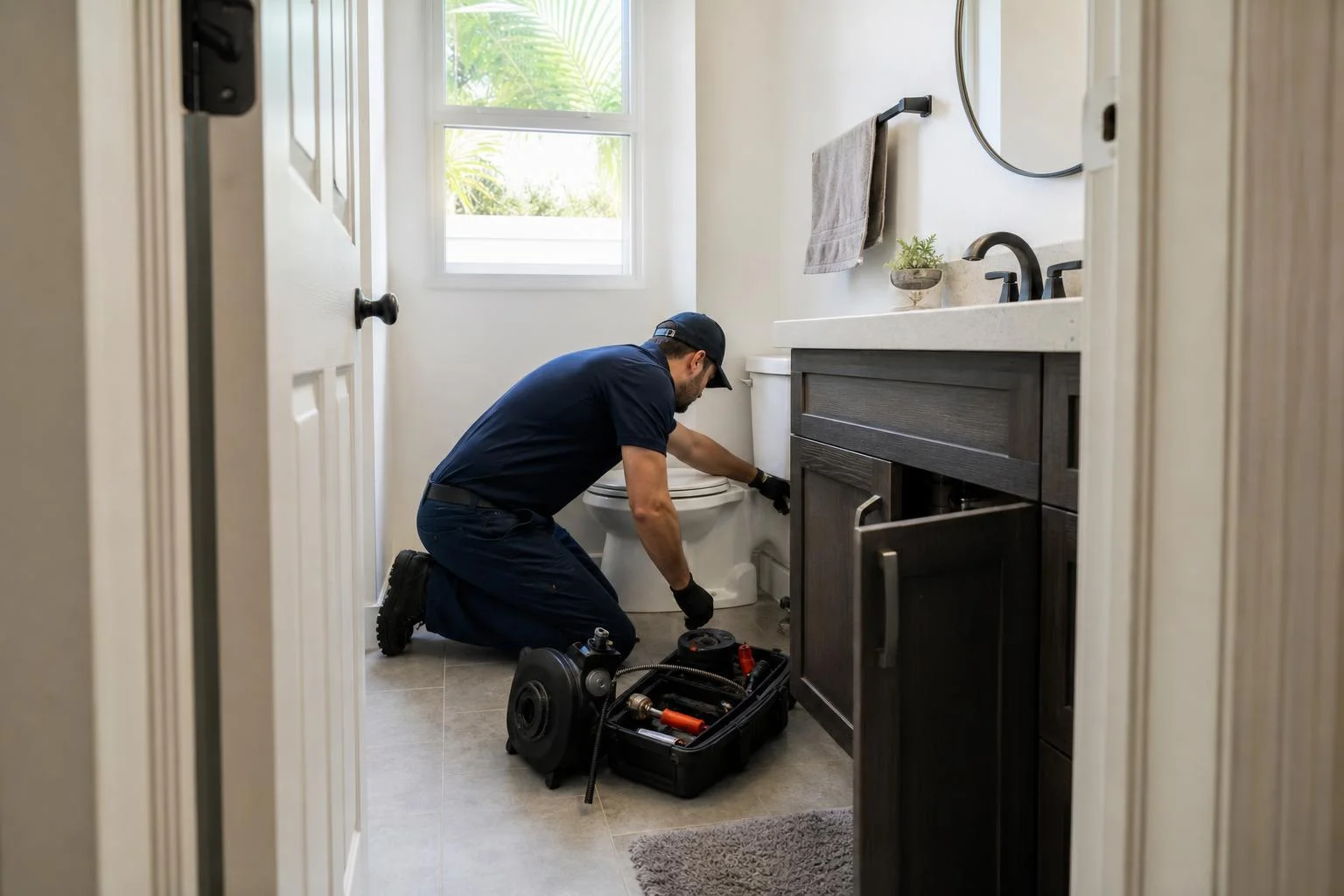
Professional drain cleaning is often the right solution when buildup, hair, wipes, roots, or scale is obstructing a line. However, a recurring odor after a toilet backup may require more than simply opening the drain. At Dymek’s Freedom Plumbing, a plumber can assess the affected fixtures and recommend the right next step based on the condition of the system.
Camera Inspection for Hidden Drain Problems
A sewer camera inspection lets a plumber view the inside of drain piping without unnecessary digging or guesswork. It can reveal root intrusion, grease and debris accumulation, cracked pipe sections, offset joints, bellies that collect waste, or a foreign object caught in the line. This is especially useful in established Orange County neighborhoods where aging sewer lines and invasive tree roots can create repeat drain problems.
Rooter Service for Persistent Blockages
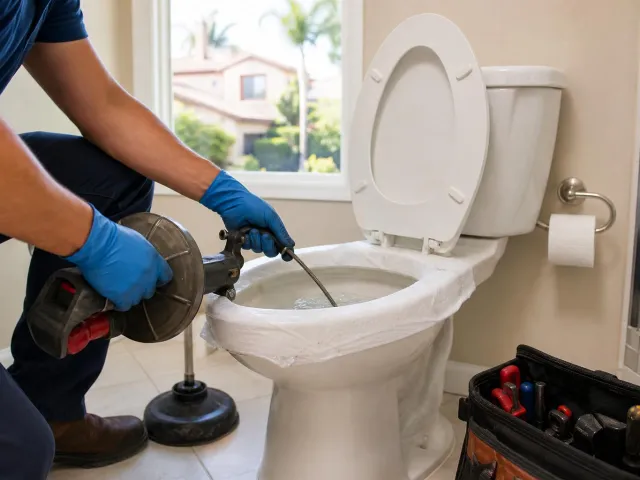
Rooter service can mechanically clear blockages in a drain or sewer line. It is often appropriate when a hall bathroom backup is caused by roots or compacted debris farther down the pipe. If roots are present, clearing them restores flow, but pipe repair or a maintenance plan may be recommended if the roots are entering through breaks or joints.
Pipe Repair and Toilet Seal Repairs
When odor is caused by a cracked drain, failed fitting, or deteriorated toilet seal, clearing the drain alone will not solve the problem. Targeted pipe repair, toilet resetting, or replacement of a damaged component may be needed to stop sewer-gas leaks and protect the surrounding floor structure.
How Orange County Homes Can Prevent Future Drain Odors
According to EPA WaterSense guidance, household leaks can waste nearly 10,000 gallons of water per year in an average home. While not every odor indicates a water leak, prompt attention to plumbing changes can prevent small drain or seal problems from becoming costly damage. Regular habits also reduce the likelihood of another backup.
- Use sink and shower strainers to capture hair and debris before they enter the drain.
- Flush only toilet paper and human waste; wipes labeled “flushable” often contribute to clogs.
- Run water periodically in rarely used bathrooms to maintain the P-trap water seal.
- Schedule professional drain cleaning if recurring slow drains, gurgling, or odors develop.
- Consider a camera inspection after repeated backups, particularly in older properties or homes with mature landscaping.
- Address leaks around toilets and under sinks quickly to protect flooring, cabinets, and subfloors.
For commercial properties, restaurants, offices, and multifamily buildings, regular preventive plumbing service is particularly important. Higher fixture use means small buildup issues can become disruptive backups quickly. A documented maintenance schedule helps property managers reduce emergency calls and keep restrooms sanitary for tenants, customers, and employees.
Call an Orange County Plumber for Lasting Odor Relief
A smell after a previous hall-bath backup should not be ignored or covered with air fresheners. The odor may be as simple as a dry P-trap, but it can also point to a partial drain blockage, a failed toilet seal, root intrusion, or a damaged sewer pipe. Dymek’s Freedom Plumbing provides professional rooter service, drain cleaning, sewer camera inspections, pipe repair, and general plumbing for residential and commercial customers throughout Orange County. If your hall bathroom has a recurring sewage smell, slow drain, gurgling fixture, or another backup, contact Freedom Plumbing for an accurate diagnosis and dependable repair. Acting early can help restore a clean-smelling bathroom and prevent a larger plumbing emergency.